What happens when the idea of bringing people from Cyprus and Austria together becomes a reality? Once upon a time in June, twenty people gathered in the mountain town of Kapedes to bring their diverse skills into a shared process of learning, listening, and hands-on practice around peaceful conflict mediation and the role of art and pedagogy in it. It was the Arts & Solidarity Lab, organised by FemLink Collective together with Celadon Center for Arts and Ecologies. Bringing together practitioners from Vienna and Cyprus, the lab became a space for knowledge co-creation and collective reflection.
Article by: Ellie Polishchuk and Leo Бraвеrмаn. Photos by nika holin
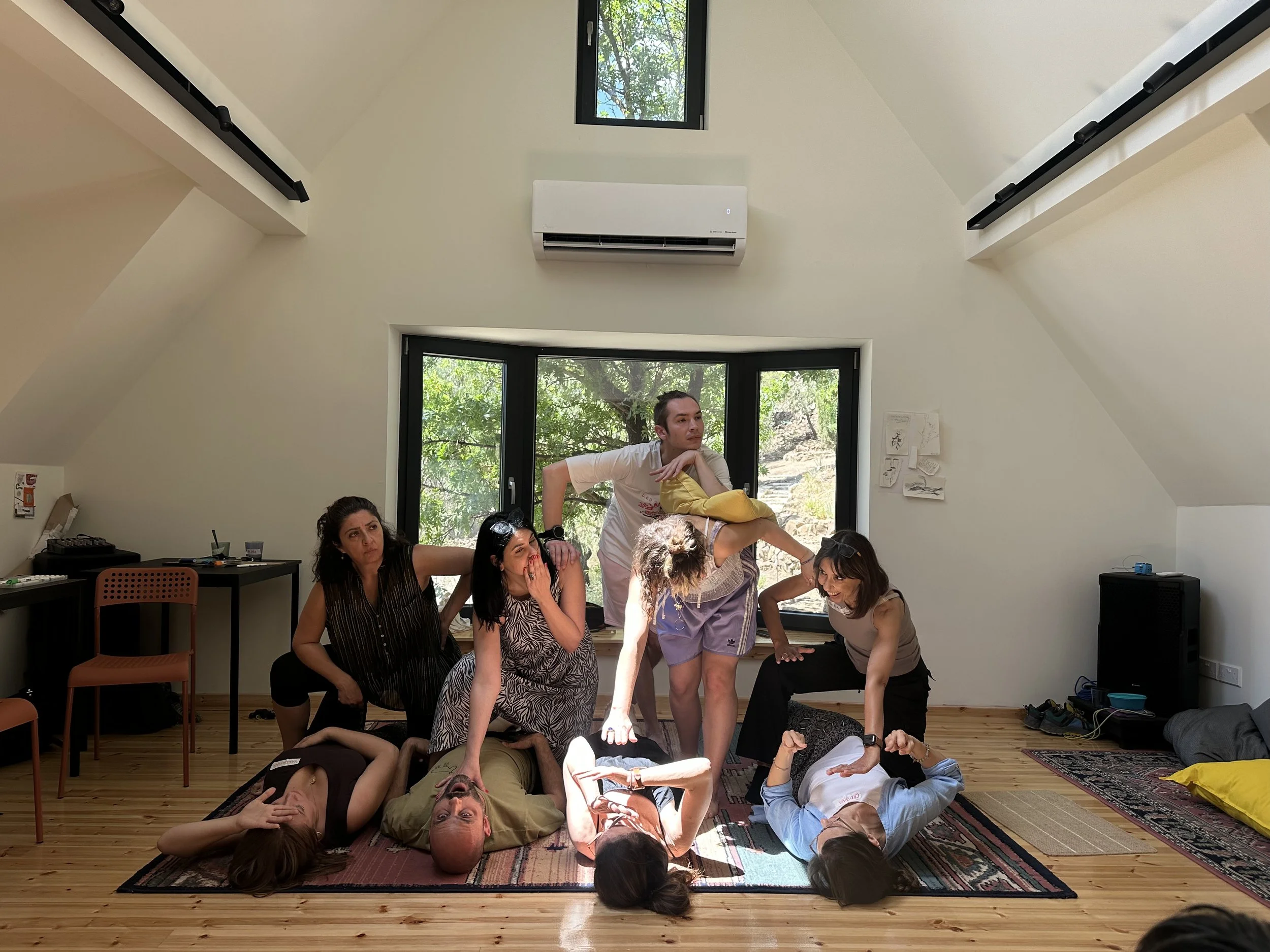
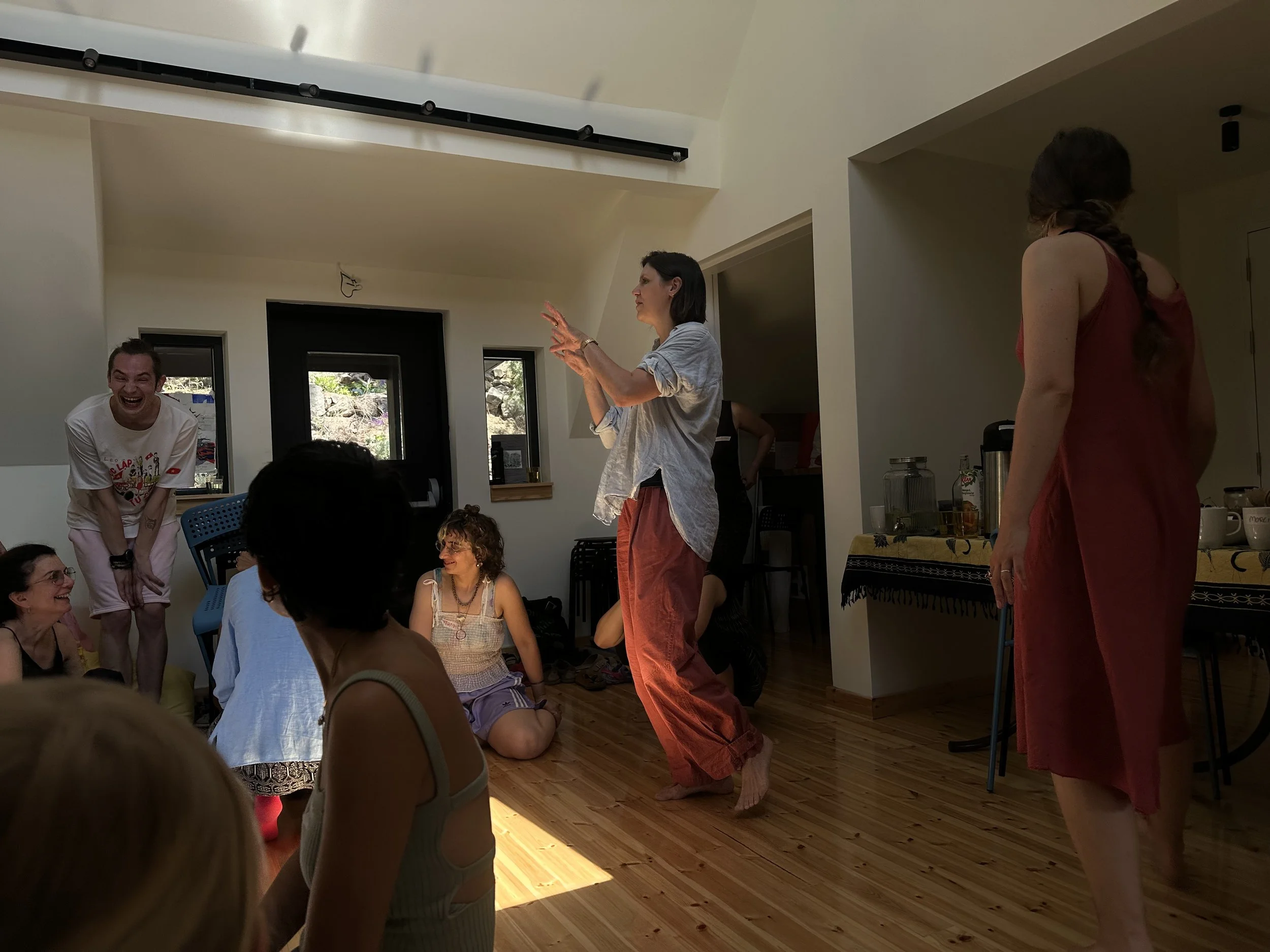
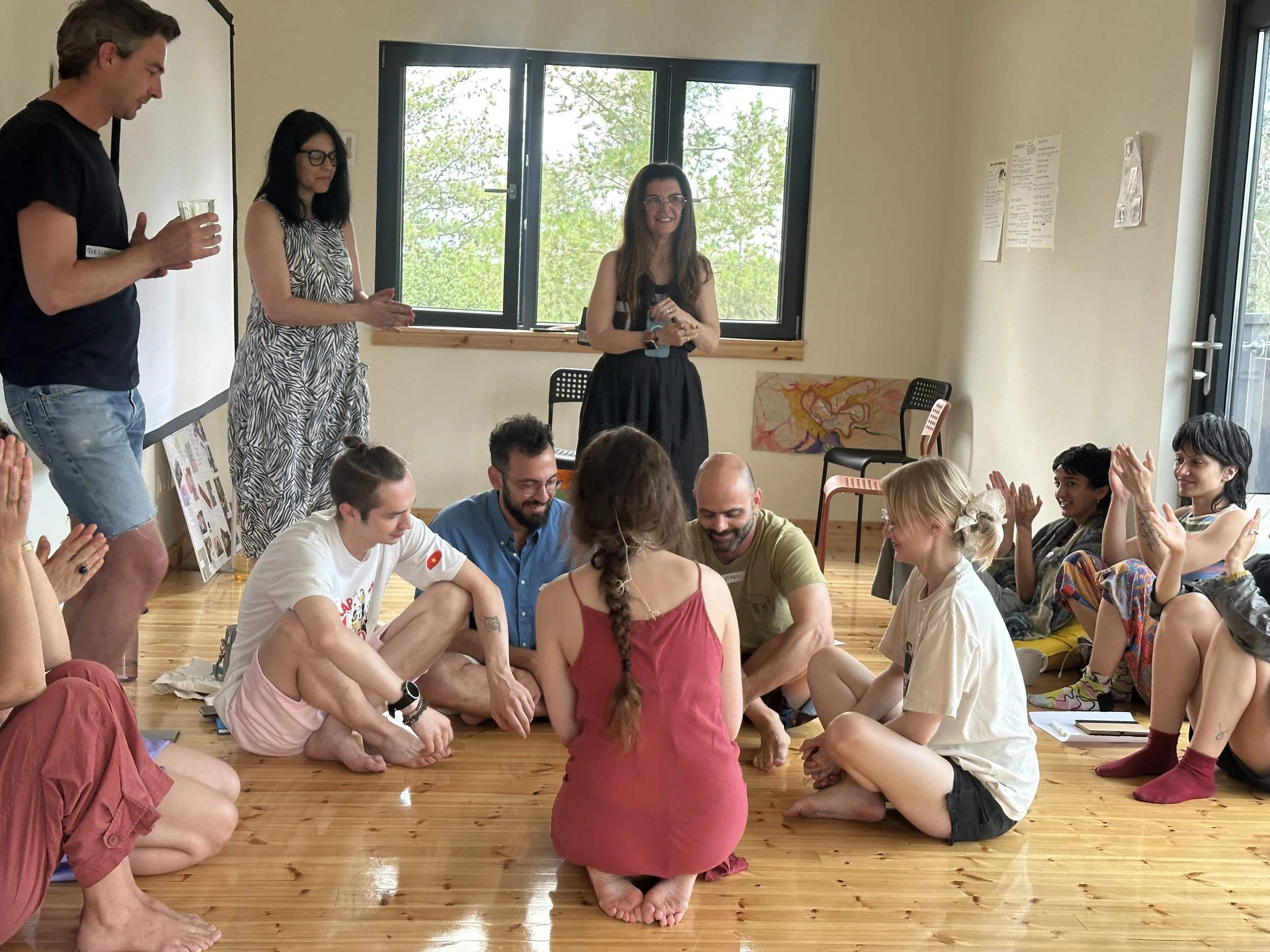
Not knowing yet where this journey would take us, we sat in a spacious room filled with natural light, its wooden floor grounding the space where we introduced ourselves before moving into the first theoretical session on conflict studies.
It was a field I already carried some intuitive knowledge of—one can often observe and sense group dynamics without necessarily having the language for them.
What felt meaningful was finally encountering concepts that gave structure to those observations: establishing shared terminology, clearer frameworks, and a common ground from which to think together.
Ana Castrov, one of the facilitators, gently immersed us in a workshop on art therapy.
Through drawing, movement, and attentive observation, I gradually felt myself connecting with both the space and the people around me. This was the first moment when the ice truly broke for me. I noticed a particular bodily freedom within the group. I could choose any posture in the room—sit however I felt comfortable, stretch, move, or lie on the floor—and each of these ways of inhabiting the space felt equally natural and warmly accepted by everyone else. I felt safe and comforted in responding to my body's needs. That sense of ease remained with me throughout the entire laboratory.
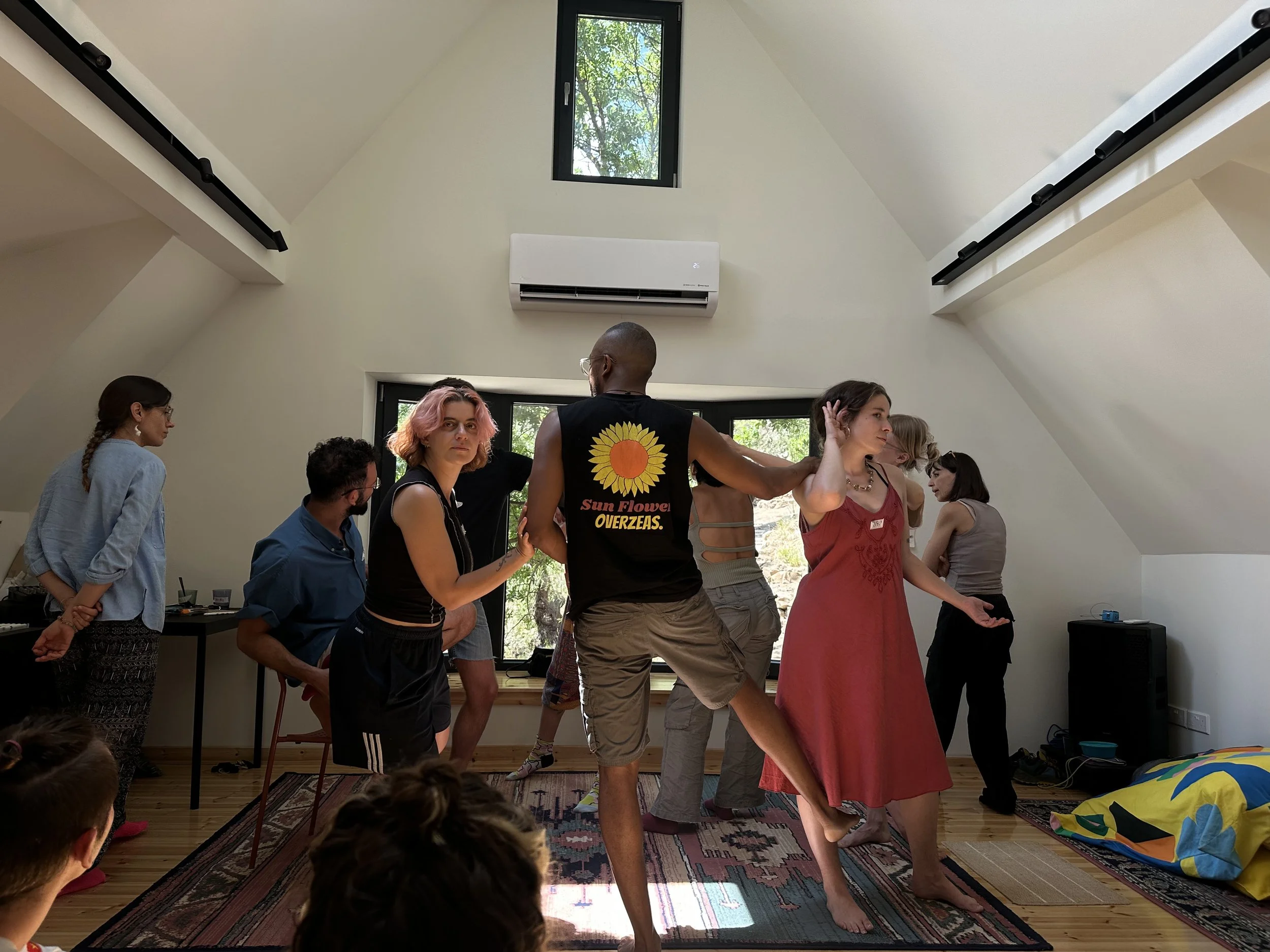
The following day, Katie Schalmann introduced us to methods from the Theatre of the Oppressed and demonstrated how they can be adapted to express, negotiate, and work through conflicts within organisations and collective settings. We spent the day in movement and somatic practices, gradually getting to know one another more deeply while navigating different perspectives through embodied exercises. Writing practices facilitated by Alev Adil and Gabriel Koureas complemented this process, creating moments to pause, articulate, and reflect on experiences that had emerged through movement.
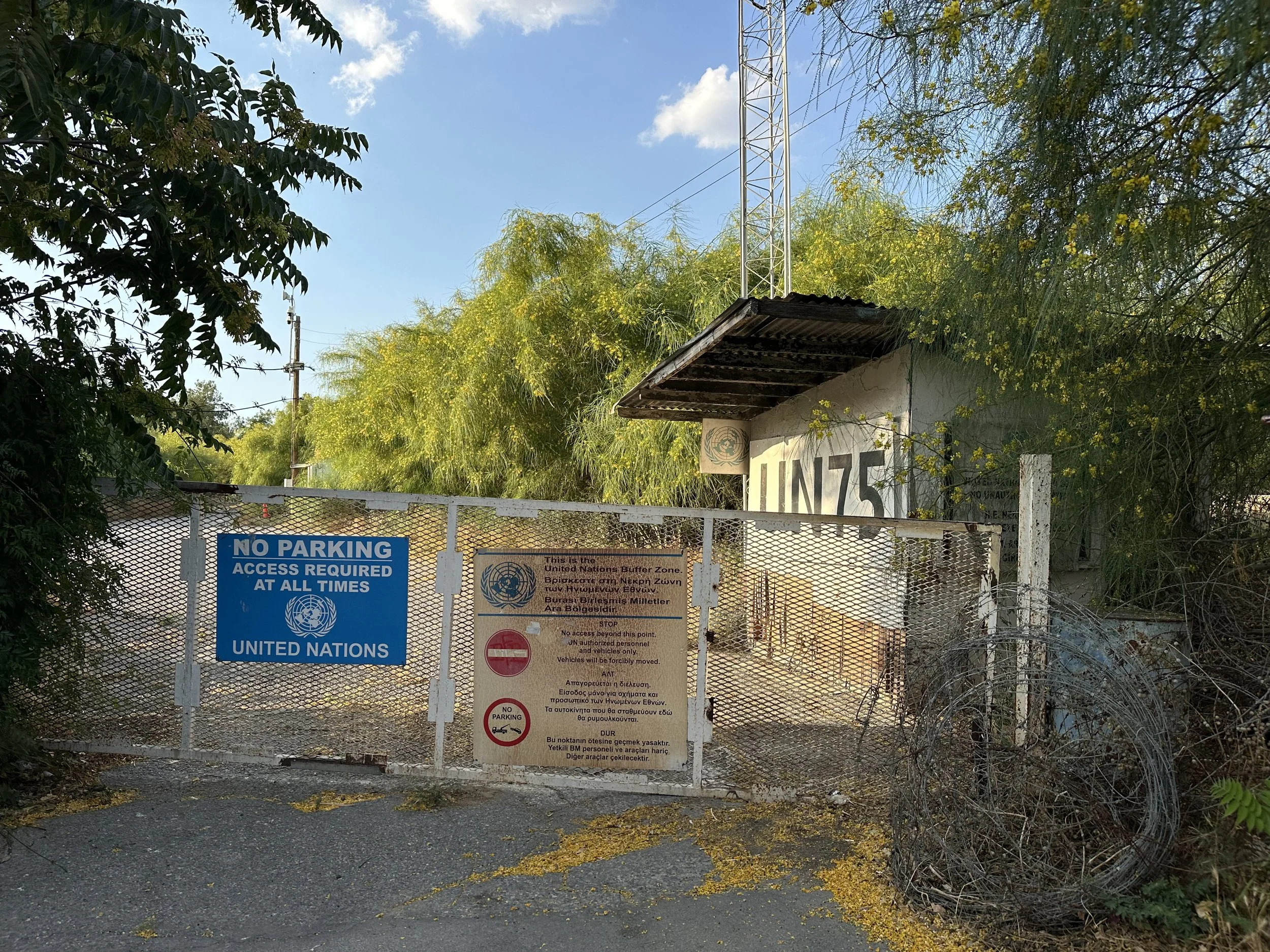
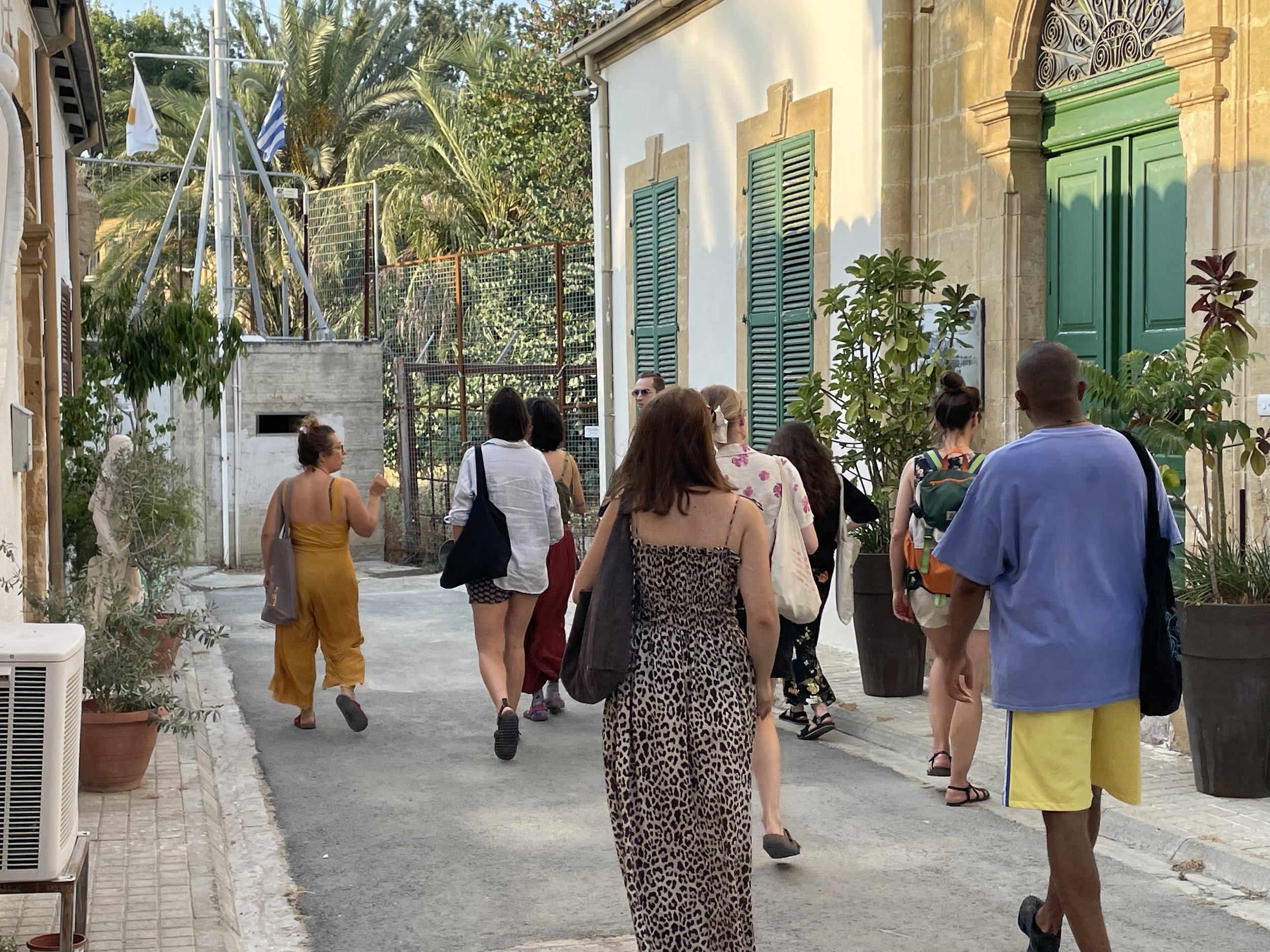
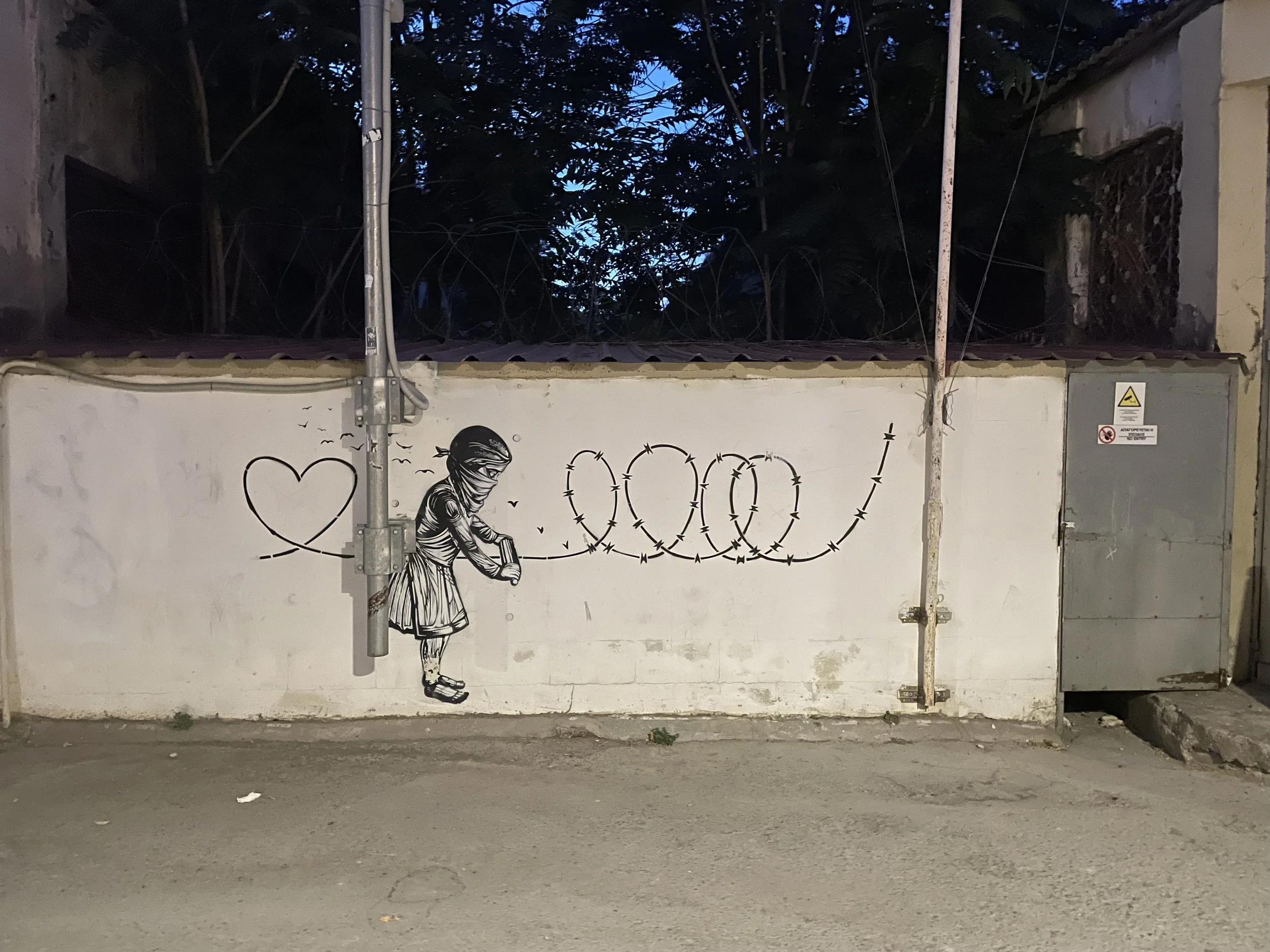
Conflict, as we explored throughout the programme, extends far beyond interpersonal disagreement or internal emotional states. It also unfolds across places, institutions, histories, and political realities. Later that evening, Evi Tselika guided us through the Old Town of Nicosia, sharing stories of the divided city and its layered histories. Walking alongside the buffer zone, visiting cultural spaces, and listening to accounts of everyday life allowed us to reflect on how memory, identity, and borders continue to shape coexistence in the present.
That evening and throughout the following day, our conversations centred on the affective dimensions of borders. Some participants went to the Northern Side of the island to experience everyday life there firsthand. Some were unable to cross because of their travel documents, while some consciously chose not to because of personal or political reasons. Questions surrounding the ethics of visiting post-war regions, occupied territories, and unrecognised political entities remained present within the group. What kinds of responsibility, identity, and positionality does one’s body carry when entering such spaces?
One thing became clear to me: beyond regulating physical mobility, borders produce emotional, ethical, and identificational effects.
There was no universal answer to these questions—only personal decisions, each shaped by different values and experiences.
The diversity of practices became one of the most meaningful aspects of the programme. We spent day three at the University of Nicosia, returning to our notes and reflecting on experiences of pain, conflict, and care. Through drawing, collage-making, writing, and collective discussion, participants translated individual observations into shared forms of expression. Art books became both sources of inspiration and spaces of relief, allowing thoughts to settle into images and words. These days also opened space for exploring the city itself—visiting museums, independent zine spaces, and walking through streets flooded with bright sunlight, paying attention to the atmosphere as another layer of the experience.
The fourth day shifted towards further skill sharing. Working in smaller groups composed of participants based in Austria and Cyprus, we developed workshop concepts inspired by what we had experienced throughout the previous days. It became an intensive process of co-creation and mutual exchange in which diverse professional backgrounds shaped the emerging ideas. Performative arts, art therapy, and embodied practices intertwined, revealing where these methods could be adapted for different communities and group settings.
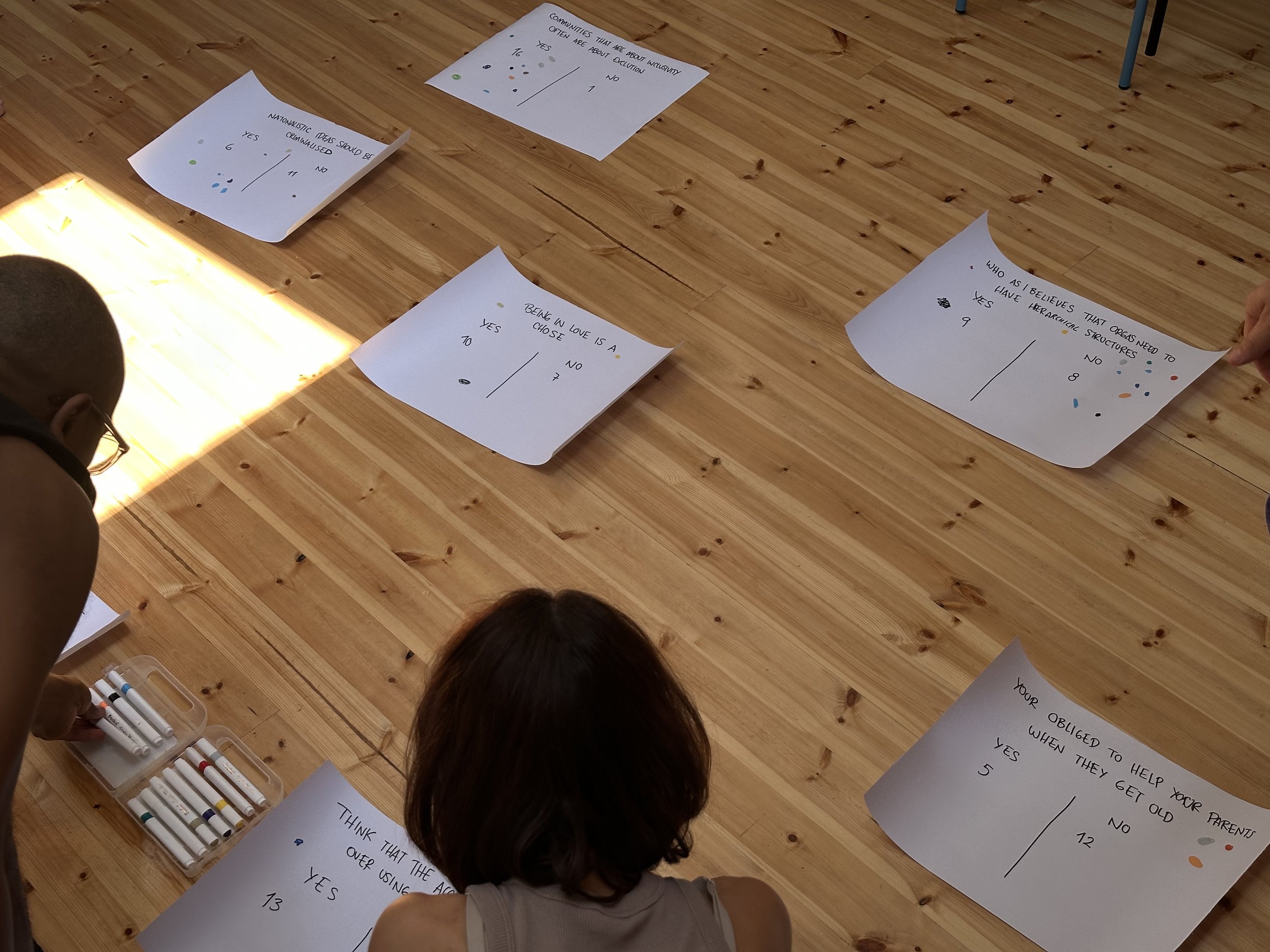
Together, we explored ways of recognising and decoding group dynamics, reflecting on how artistic and embodied methods can cultivate solidarity, encourage dialogue, and contribute to creating spaces where people feel comfortable enough to participate, share, and listen.
On the final day, each group presented its workshop proposal on peaceful conflict mediation to the others. Through role-play and collective facilitation, participants demonstrated the structure of their workshops, inviting the wider group into the activities while opening space for reflection and feedback. Rather than presenting finished outcomes, these sessions became opportunities to test art-based methods, exchange perspectives, and continue developing ideas through shared discussion and mutual support.
Looking back, the lab offered a gentle way of approaching conflict. Conflict is not something to be carried individually, but as a process of thinking, speaking, and reflecting together. Bringing people from different locations into one shared space and connecting these diverse experiences through artistic and participatory practices over the course of five days created meaningful relationships within the group and beyond it.
This was not simply a journey across borders. Arriving in Cyprus meant encountering the reality of a divided island firsthand. Crossing the checkpoint to the North became a moment of witnessing the conflict with our own eyes, listening to personal stories, and trying to grasp the emotions, memories, and uncertainties carried by the people in the group. The place itself became part of the learning process, shaping reflections as much as the workshops did.
The laboratory became a space for practicing care: for active listening, making room for different perspectives, and allowing ideas to emerge collectively rather than in isolation. It encouraged us to reflect not only on the methods we encountered, but also on how these practices can be carried into other communities, collective settings, and everyday forms of solidarity. Rather than offering definitive answers and archiving outcomes, the experience opened possibilities for continuing these conversations and ways of working together elsewhere.
The lab has ended. The next morning I arrived at Phaphos. I was watching the blue skies colliding with peacefully swaying waves on the horizon. Loaded with emotions and feeling wistful from group separation, I knew that something important happened to me there, something I want to carry with me further into the world.

„Funded by the European Union. Views and opinions expressed are however those of the author(s) only and do not necessarily reflect those of the European Union or OeAD-GmbH. Neither the European Union nor the granting authority can be held responsible for them.“
